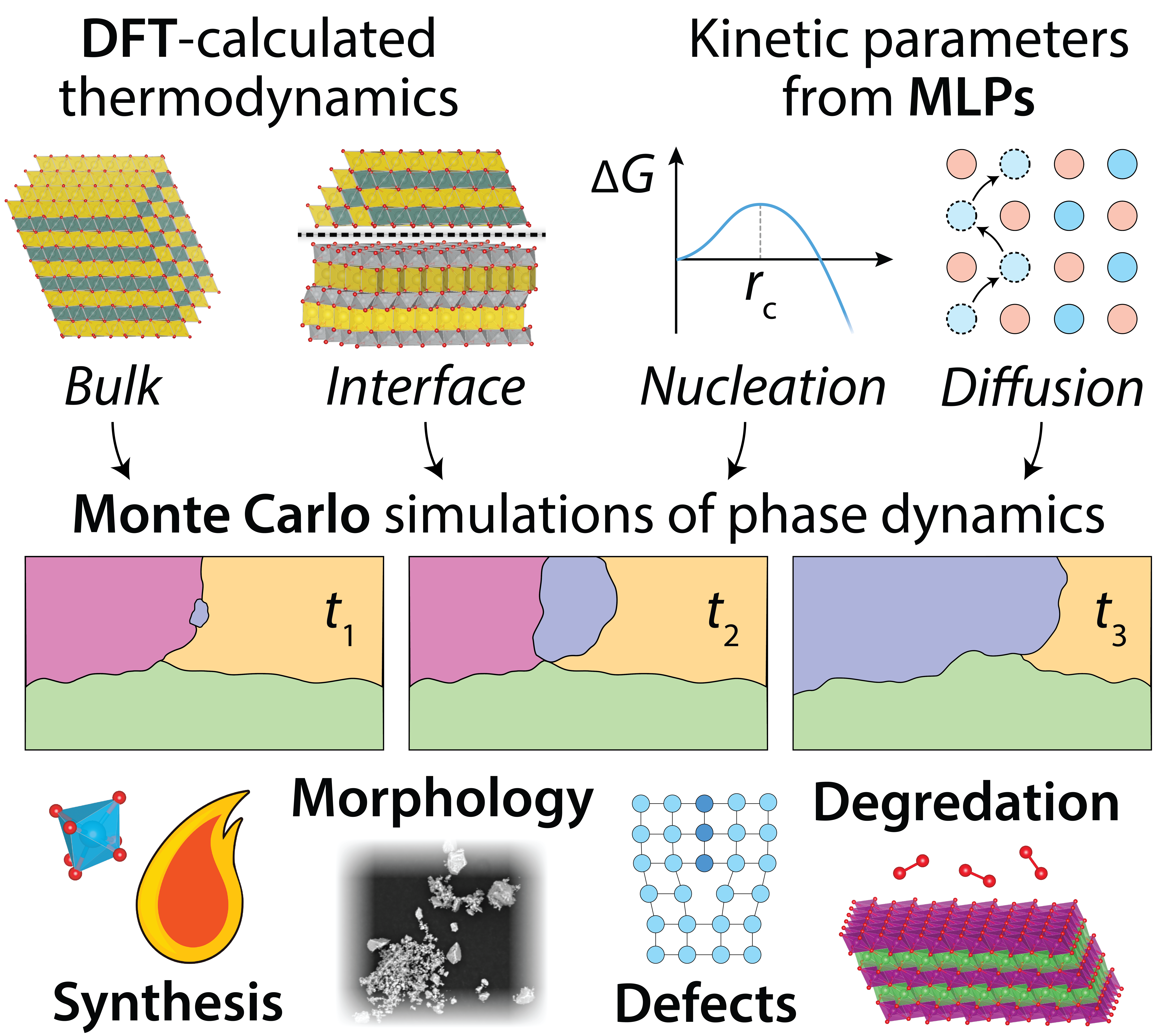
We develop computational frameworks to model solid-state reaction kinetics under realistic conditions. Combining density functional theory (DFT) calculations and machine learning interatomic potentials (MLIPs) with enhanced-sampling molecular dynamics and kinetic Monte Carlo simulations, we go beyond thermodynamic predictions to understand how materials transform at the atomic scale.
By learning the rare atomic events that govern diffusion, nucleation, and interface migration, we predict how reaction products form and microstructures evolve over experimentally relevant timescales — determining synthesis outcomes and dictating material properties under operational conditions for energy technologies and high-temperature ceramics.
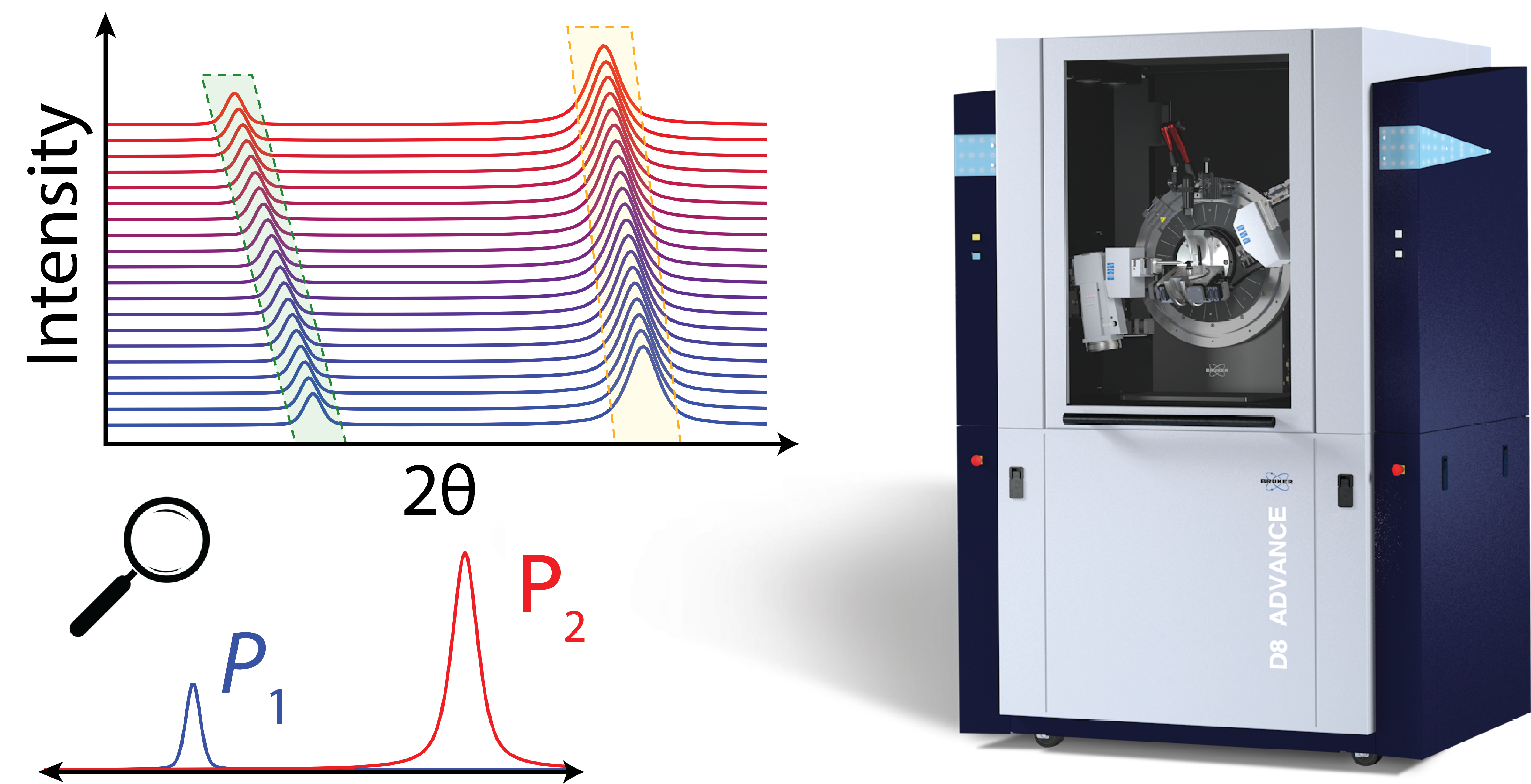
In-situ X-ray diffraction (XRD) measurements performed at high temperature reveal how materials transform during synthesis and device operation.
We combine bespoke robotics with AI to automate the collection of in-situ XRD data in high throughput. These measurements directly validate computational predictions by revealing the hidden intermediates that often form in complex reaction pathways.
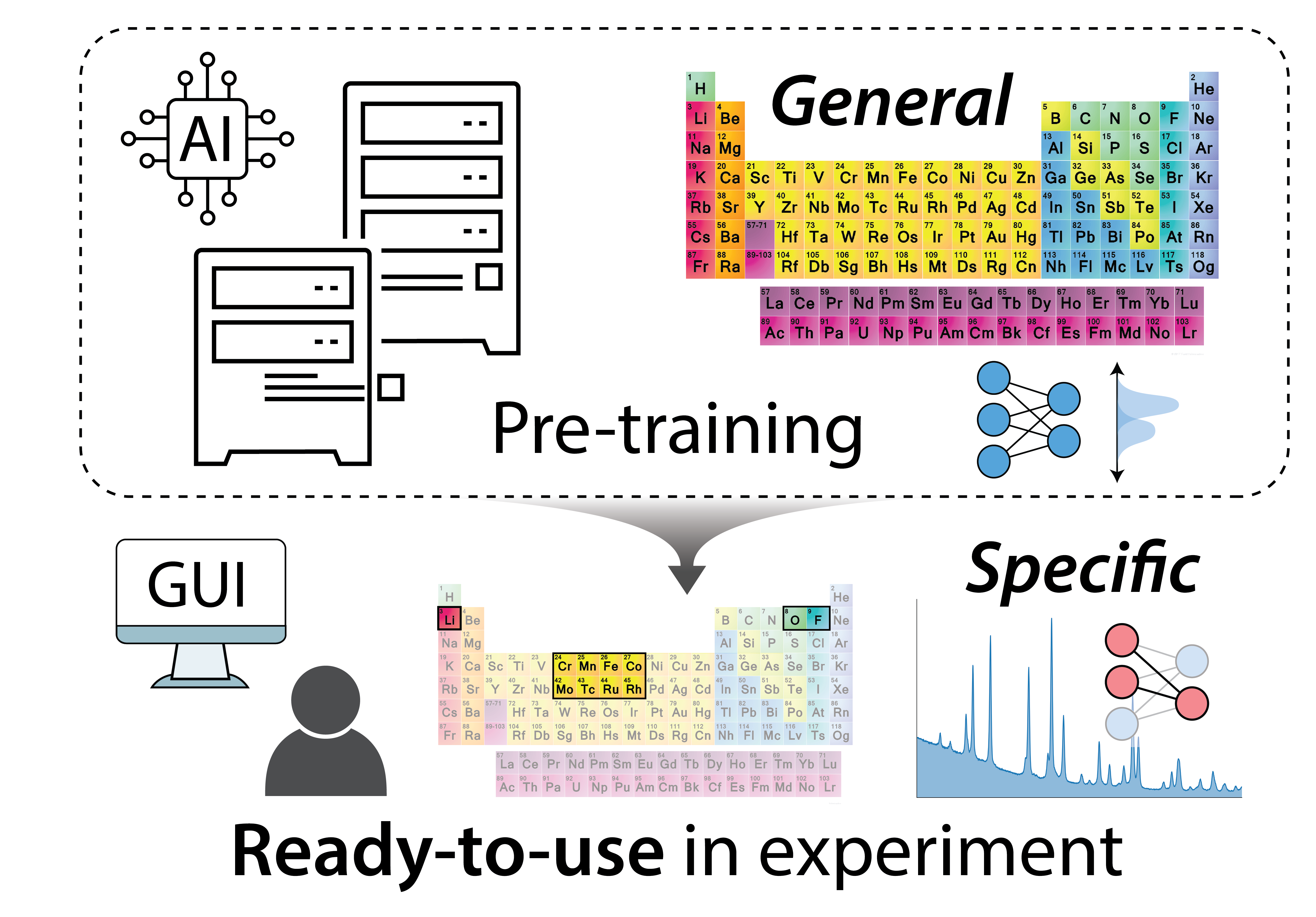
We create ready-to-use AI tools to facilitate the analysis of characterization data from techniques including XRD, spectroscopy, and electron microscopy. These foundation models are pre-trained to enable rapid interpretation of experimental results without requiring extensive computational resources.
These tools are designed to work under non-standard conditions and with complex multiphase systems, streamlining the characterization process. One example is GALAXI, our framework for identifying multiphase mixtures from powder XRD, which is freely available online.
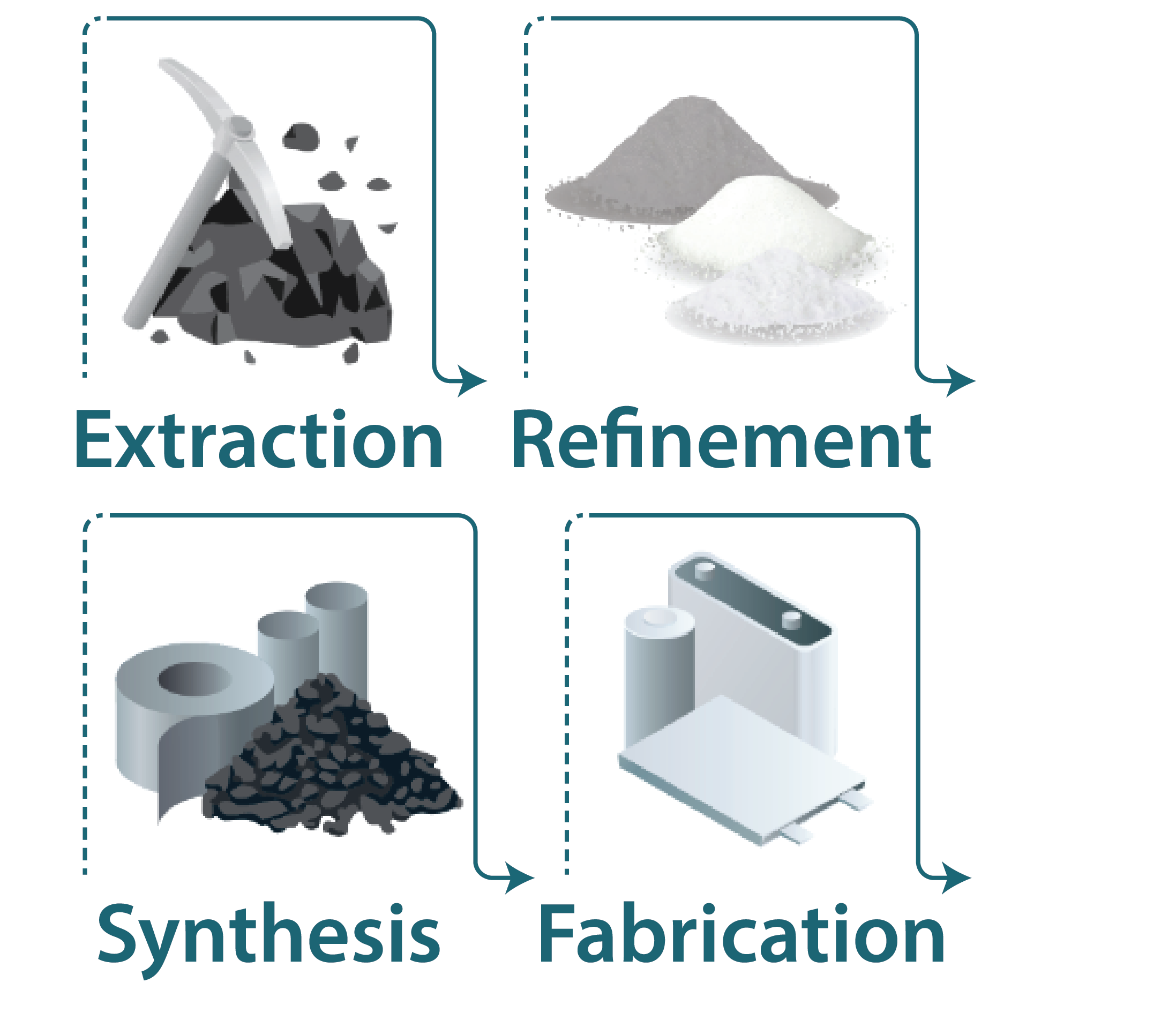
We redesign synthesis routes for energy materials to minimize environmental impact while maintaining good performance. Using the tools described above, we optimize each step of manufacturing - from mineral extraction to device fabrication.
Our work primarily focuses on reducing energy consumption, CO2 emissions, and hazardous chemical use in the production of battery materials and related energy technologies.
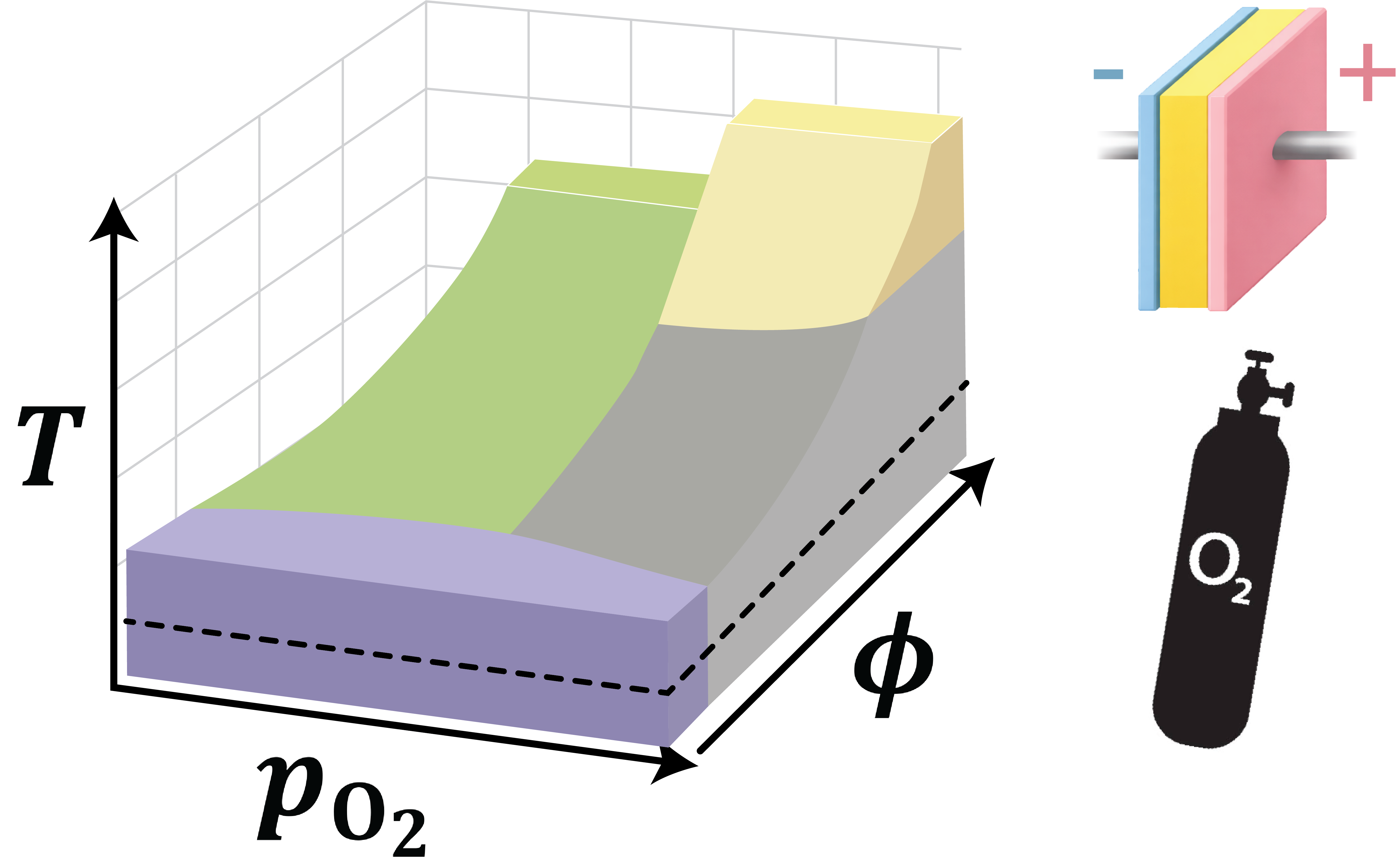
We are developing new routes to reach metastable materials that lie out of reach of conventional heating alone. By applying electromagnetic fields and electrochemical potentials during synthesis, we treat these stimuli as additional thermodynamic axes — beyond temperature and pressure — that reshape reaction energy landscapes and unlock hidden regions of the materials space.
We pair these field-assisted reactions with in-situ diffraction and closed-loop AI control, steering the applied fields in real time to guide the formation of targeted phases.